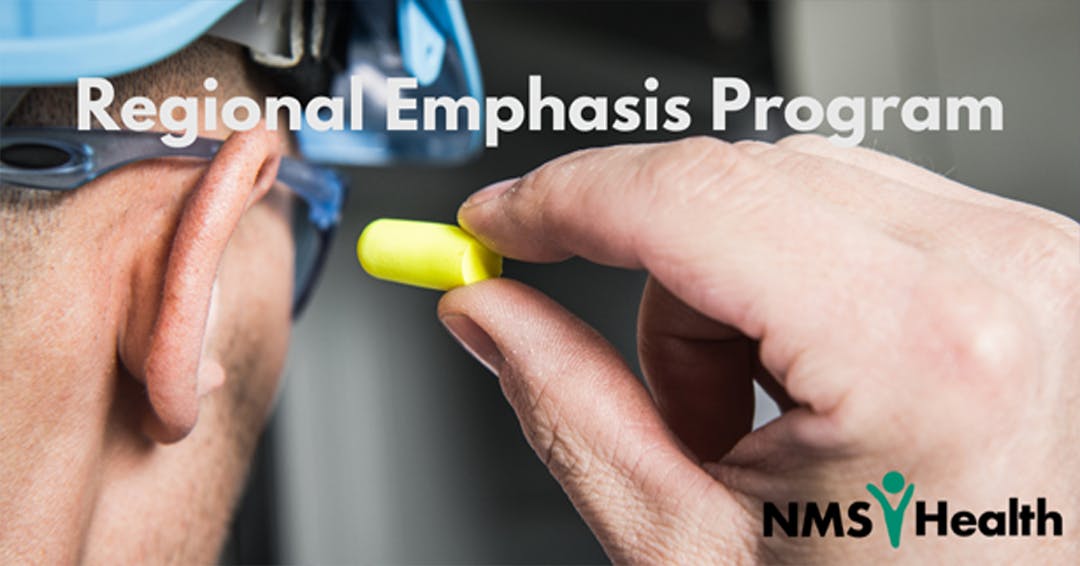
Hearing Regional Emphasis Program
OSHA’s new Regional Emphasis Program focuses on hazardous noise in the Midwest
OSHA has introduced a Regional Emphasis Program to address workplace hazardous noise in the manufacturing industry in the Midwest. The intent of the REP is to encourage employers to update their processes to identify, reduce, and eliminate hazards that accompany exposure to high levels of noise. According to the Bureau of Labor Statistics, the incident rate for hearing loss for all private industries nationwide was 1.4 per 10,000 full time workers. All private manufacturing workers however, have hearing loss at a much higher rate, with 8.6 cases per 10,000 full time workers.
What happens during the Program?
The first step to the REP is an education component. On June 1, a three month outreach and educational campaign started that includes targeted presentations and training, letters to employers and local safety councils, and news releases through newspapers, safety councils and social media. At the conclusion of this three month period, Compliance Safety and Health officers with specialized training in the REP will conduct inspections of select manufacturing industries in Illinois, Ohio, and Wisconsin to determine sound levels, review injury logs and any noise monitoring data collected by the employer. The locations for inspection will be randomly selected from a list of workplaces in 50 heavy industries that are classified by the North American Industry Classification System (NAICS).
Hearing Conservation
“Earning a living should not come at the expense of hearing loss,” remarked OSHA’s Acting Regional Administrator William Donovan. “Hearing conservation programs are designed to prevent workplace hearing loss, protect remaining hearing, and provide employers and workers with the knowledge and equipment to control and reduce exposure to noise.”
OSHA requires employers to provide a hearing conservation program to employees if noise exposure is at or above 85 dB averaged over 8 working hours, or an 8 hour overall average. A hearing conservation program includes:
- Measuring noise levels in the workplace. Monitoring must take place whenever there are changes in production or processes which may increase noise levels.
- Providing hearing protection and training to employees.
- Evaluating the adequacy of hearing protectors that are in use in the workplace.
- Providing baseline and annual audiograms to be used as the test of record to determine and monitor hearing loss due to hazardous noise exposure.
Employers are encouraged to be proactive in taking appropriate steps to manage and protect their employees' hearing during this three month outreach period.
Need an audiogram or hearing test for your employees?
Our service is designed to make the screening process simple and less time consuming for your hiring teams. With a large network of clinic partners, we've got coverage in all 50 states!
Categories
Latest posts
-
States with Legalized Cannabis See Fewer Synthetic Cannabinoid Poisonings
- Sep 02, 2022 -
Chronic Disease: The Trucking Industry’s Silent Killer
- Aug 30, 2022 -
OSHA Hearing Conservation Requirements
- Aug 23, 2022